



From Sion Mills glory to tragedy in New Jersey: the remarkable story of William Patterson
More than a century after his death, the story of William Patterson provides a fascinating link between the great linen industry of the North West, the early days of Sion Mills cricket and one of the most notorious heatwaves in American history.
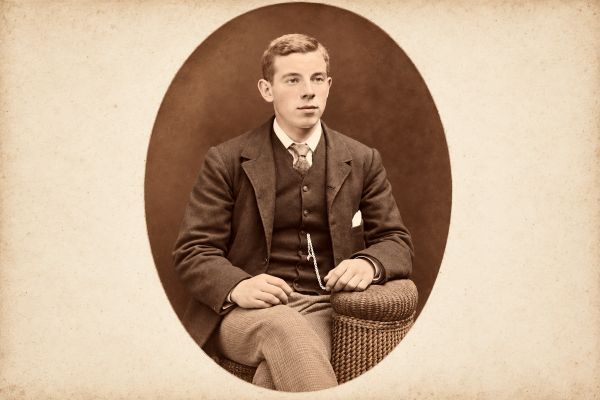
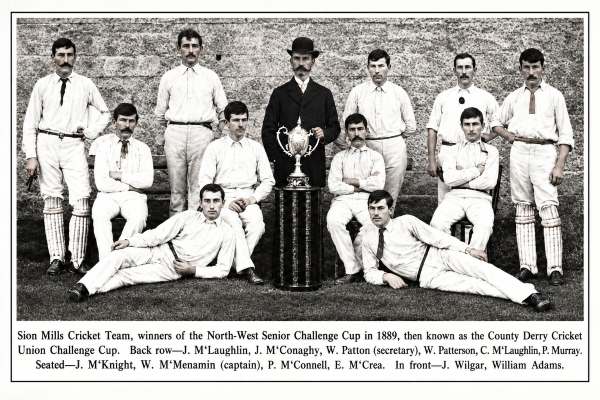
Born in Sion Mills in 1868, Patterson was a flax dresser by trade and a cricketer of some distinction. His name is forever associated with one of the landmark moments in the history of Sion Mills Cricket Club — their County Derry Cricket Union Challenge Cup triumph of 1889.
Sion Mills defeated Dungiven in the semi-final before overcoming Donemana in a fiercely contested final to lift the trophy that would ultimately become the historic North West Senior Cup.
Among the victorious Sion side were Patterson and his cousin James McKnight, both flax dressers.
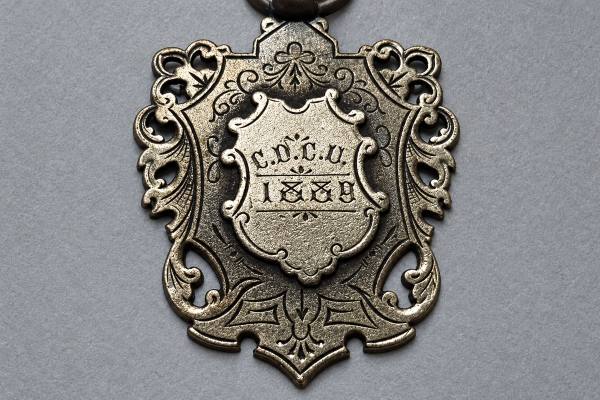
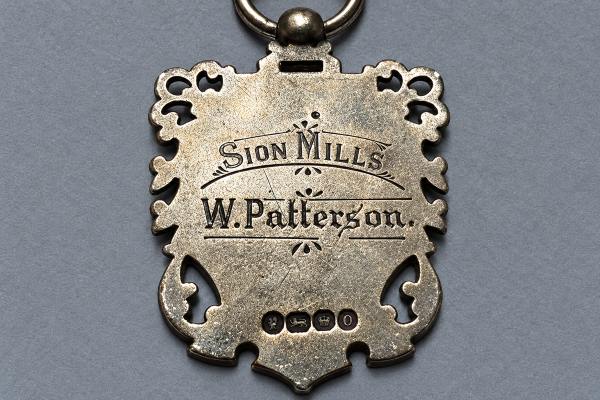
A treasured silver medal survives from that triumph, engraved with “Sion Mills” and “W. Patterson”. Its hallmarks date it to the period of the famous cup victory, while the silver chain and medal can also be seen in a posed photograph of Patterson, alongside his pocket watch.
It is a wonderful tangible connection to a cricketer whose life would subsequently take him thousands of miles from his Tyrone home.
Patterson married Sarah McClintock at Ballysillan Presbyterian Church in the Shankill parish of Belfast on November 2, 1894, with James and Essie McKnight acting as witnesses.
Sarah was from Wolfhill, near Ligoniel, another area synonymous with Belfast’s linen industry. One family theory is that their paths may have crossed through that trade, perhaps after Patterson moved from Herdman’s at Sion Mills to employment around Wolfhill, although that has yet to be established conclusively.
William, Sarah and their daughter Maggie eventually left Ireland for America aboard the 'City of Rome', sailing from Londonderry and arriving in New York on June 25, 1900.
Their destination was Kearny, New Jersey, then an important centre of linen production, where Patterson could put his specialist skills as a flax dresser to use.
Cricket travelled with him. And tragically, it appears to have played a part in the circumstances surrounding his death less than a year later.
The summer of 1901 brought an extraordinary heatwave to the eastern United States. New Jersey was among the areas badly affected, with extreme temperatures causing widespread illness and death in an era without modern air conditioning or refrigeration.
Patterson played in a cricket match during the oppressive conditions. Whether he had also completed a full day’s work beforehand remains uncertain, but the combination of physical exertion, fatigue and intense heat proved devastating.
He suffered what was recorded as 'heat prostration', the contemporary term commonly used for severe heat exhaustion or heatstroke. For four days he fought its effects, but on Saturday, June 29, 1901, William Patterson died at his home at 1 Sheridan Avenue, Kearny. He was only 33.
It was an extraordinarily sad ending to a life which, just 12 years earlier, had included the joy of lifting one of the North West’s great cricket trophies.
Sarah was left with two young children and later married William McAllen, himself a widower with three children. When Sarah died in 1935, she was buried at Arlington Cemetery in Kearny with William Patterson.
Much of what is now known about Patterson has been painstakingly pieced together by his great-grandson Ken Maglio, whose family research has brought the Sion Mills cricketer’s story back to life.
There is an appealing sporting connection across the generations too. Maglio was not himself a cricketer, but played and coached baseball — cricket’s American sporting cousin — continuing, in a different form, the family association with bat-and-ball games.
His research has preserved not only the major events but some wonderfully personal details.
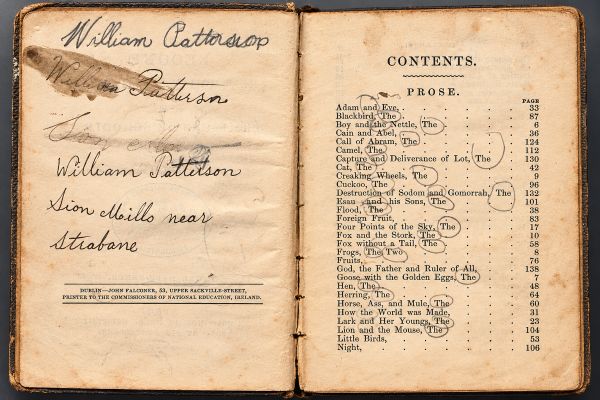
There is the silver cricket medal, family photographs and even an old primary school book which belonged to Patterson. Inside, the young William practised signing his name and wrote the words “Sion Mills near Strabane.” It is perhaps the most poignant link of all.
Thousands of miles away from the village where his life began, Patterson became part of the Irish diaspora which carried its skills, families, traditions and sports across the Atlantic. Thanks largely to Ken Maglio’s determination to uncover his great-grandfather’s story, William Patterson is no longer simply a name engraved on an old medal.
And through that medal, his photographs and the research of the family he left behind, William Patterson remains permanently connected to one of the earliest triumphs in Sion Mills cricket history.
There is a further link to the famous Tyrone sporting name, in that there are two Pattersons currently playing for the North West's most successful club. Indeed, Mark Patterson and his son Harry were part of the Sion Mills team that won the League Two trophy this season.

Their medals were considerably more modest than that presented to their namesake 137 years ago....