



In the dying hours of September, as most cricketers packed their kit into the attic and moved their thoughts elsewhere, an email was sent out by Cricket Ireland’s media department.
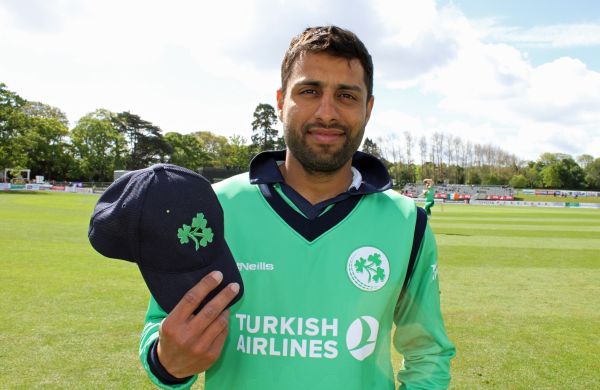
It announced that 39/year/old Simranjit Singh, who hasn’t played for Ireland for almost four years, and for anyone at all for 2½, had decided to retire.
There were warm tributes by former teammates and coaches to the man known only as ‘Simi’, but it still made many wonder: why now?
Speaking from his home in Mohali in northern India, Singh explained: ‘I was doing an interview a couple of days ago and the interviewer said he couldn’t find an official retirement announcement anywhere. That got me thinking that I needed to finish things properly and get some closure on it. So I rang Craig in Cricket Ireland and sorted it out.’
It brought back happy memories of the time, from 2006 to 2024, when he lived in this country, and the five years he spent fulfilling his dream to be an international cricketer.
His departure from Ireland was less happy, flying home to India when he was gravely ill.
His last match in Ireland was for North County away to North Kildare on May 4th, 2024. Singh was out for a duck but took 5/38.
‘I remember coming home afterwards absolutely exhausted. From the next day onwards I developed a fever that came out of nowhere and just wouldn’t go away.
‘I went to doctors in Ireland and was treated in hospital, but they couldn’t diagnose what was causing it. I was given antibiotics and different treatments.
‘Eventually I decided to come back to India to get it checked here which, looking back, turned out to be a mistake.
‘I went to local doctors first and then to a bigger hospital, but they couldn’t properly diagnose it either. They suspected tuberculosis and gave me very strong medication, even though my tests were negative.
‘I was actually beginning to feel better before I started that treatment, but about 10 days after starting it I became really sick again.
‘We then discovered that my liver had been badly damaged by the medication and I had acute liver failure. There wasn’t much time because my liver was failing very quickly.’
Singh was admitted to intensive care, but after several days the hospital admitted it was beyond its expertise and that he needed to go somewhere specialising in liver transplants.
‘We went to a major hospital in Gurgaon, near New Delhi. By that stage I was in a really bad condition. I was in a coma and didn’t know what was happening,’ says Singh.
‘They needed to find a donor immediately. There wasn’t time to wait for a deceased donor, so my wife Agamdeep came forward. They did all the tests and thankfully she was compatible.
‘I was told afterwards that I was probably only about half an hour away from it being too late for surgery. The next stage could have been a brain haemorrhage because the toxins were spreading through my body.
‘Agamdeep and I both underwent surgery and I woke up four or five days later with absolutely no idea what had happened.
‘I had tubes everywhere. Those first few days in intensive care were really difficult and confusing. I couldn’t speak because of the tubes, the nurses couldn’t tell me very much, and I would just see my parents coming in each morning and waving at me from a distance.
‘When I eventually moved to the ward, they explained what had happened.
‘A few days later I went into the bathroom and looked in the mirror. I couldn’t recognise myself. My face looked completely different. That was when it really hit me what I had been through.’
Singh has to take medication every day, and will do so for the rest of his life, he explains: ‘When you receive a new organ, your body sees it as something foreign and tries to reject it. So I have to take immunosuppressant medication to lower my immune system and stop it attacking the liver.
‘That means you also have to be extra careful about infections. Gradually they reduce the medication, and things are much more normal for me now than they were a year ago.
‘I’m able to do a lot more now. The one thing is I can’t have a pint anymore — although I wasn’t much of a drinker anyway!’
Singh’s initial visit to Ireland was in 2006.
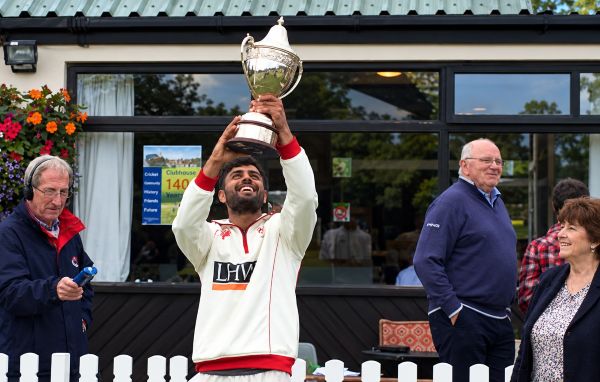
‘I first came over as a student,’ he said. ‘I was studying at the American College in Merrion Square. Basically, I came over to play cricket, but I was only 19 and nobody knew me in Ireland, so I couldn’t get an overseas contract or anything like that.
‘I had a couple of friends who were guiding me about which clubs to join, but I didn’t really listen to them! I stayed in the city centre for a few weeks and didn’t like it because it was too congested for me. I had a couple of mates in Malahide, so I went out there and liked it.’
He later moved to Old Belvedere, and when that club folded joined YMCA in 2012, living for a time with the Tector family and helping coach the youngest three who all went on to play for Ireland.
‘I was playing state cricket in India at a good level. Around 2004, I didn’t get picked for the Under-19 state team and I was really disappointed because I had done well and hoped I would be selected.
‘I had grown up playing cricket and had professional coaching, so I always had the ambition of becoming a professional cricketer.
‘I had a really good season for YMCA, around 2012 or 2013, and people around Ireland were beginning to know my name. That was when I started thinking that it might actually be possible to play international cricket.
‘The qualification situation delayed things. I had originally stayed in Ireland for about two-and-a-half years, then went back to India for a year-and-a-half. I missed the qualification window and effectively had to start again when I came back in 2010.’
He has many great memories of living in Ireland, but his favourite moment was a phone call from Alan Lewis, the former Ireland captain.
‘It was a little unexpected because I was preparing for matches in Belfast, so when the call came I was surprised and very emotional. I immediately rang my parents. It was late at night in India, around one o’clock in the morning.
‘It was emotional for all of us because I’m an only child — it’s just me, my mum and dad — and it had been such a long journey.’
Lewis paid his own tribute this week: ‘Simi was a fantastic contributor to the YMCA story and great servant of the club. We were thrilled he fulfilled his dream of playing for Ireland.’
‘I made my international debut at 30,’ Singh points out. ‘By then I had been living in Ireland for more than a decade. I was well integrated into Irish culture, so it was a very special moment.
‘I remember fielding at cover and Luke Ronchi hit a shot really hard at me. It smashed into my fingers and I remember thinking, “Wow, this is the next level.”
‘Seeing all the cameras, the media and the crowd was nerve-racking at first, but then I started enjoying it. I took a catch on the boundary and that helped me settle into the game.
‘I also remember having a lot of support from the Asian community that day. I was one of the first people of Indian background to play for Ireland, so it was a big deal for the Indian community as well.’
Simi went on to play 90 times for Ireland, including 35 ODIs and 53 T20Is for Ireland. On the field he was a fine all-rounder making an ODI century against South Africa and scoring 54 and taking 5/10 against UAE.
‘Being involved in the win against South Africa was a huge highlight. Winning in the West Indies and winning in England were also special. The 2022 World Cup was another big memory — qualifying and then beating the West Indies in that crucial game to reach the next round.’
Simi was also named in two Test squads, but never made the cut.
‘I would have loved to play at Lord’s,’ he admits. ‘I remember really looking forward to that Test because I was in very good form. The week before it I had scored a hundred and taken five wickets in the same game for Leinster Lightning.
‘But from my side, I think I gave it 100 per cent and did whatever I could. Maybe I could have played a little longer, but who knows?
‘At the start of my international career I was given some good opportunities, even at times when I thought I might be dropped. That gave me confidence, particularly with my bowling, and later that confidence transferred into my batting.
‘The disappointing part was that I felt I was at the peak of my career when I was dropped from the T20 squad against India (in June 2022). That was the first time I had been dropped in quite a while and it really hurt because I felt I was playing well.
‘I thought I had done reasonably well at the World Cup too, so it was disappointing.
‘But other than that, I’m happy. I have no complaints. I loved playing with my teammates, travelling with Ireland, winning those games, playing club cricket and meeting all the people I met along the way.
‘It was fantastic. I couldn’t have asked for anything more.’
Simi also set two world records, being the first Number 8 batsman to score an ODI century, and for his unbeaten 7th wicket partnership of 215 with George Dockrell for Leinster Lightning.
Singh hasn’t played since that last game for North County in Kilcock, but a long spell in rehab let him plan for his future, setting up his own cricket academy in Mohali.
‘It has actually helped me a lot mentally,’ he says. ‘After the transplant I spent about a month in hospital and then another couple of months in an apartment near the hospital because I was still very vulnerable to infection.
‘After that I spent around six months in isolation. Staying at home all the time was beginning to drive me crazy. I had access to some land near the city and we decided to develop a cricket ground and facilities there.
‘We now have about 50 children in the academy. I have three or four coaches helping me. I manage everything and do some coaching myself, although I’m mainly overseeing it all.
‘We also have a ground and host a lot of matches. Corporate cricket is very big here, with companies playing against each other, so we host tournaments as well.
‘I’ve been able to train a little bit, but all my power and strength went. I have to rebuild myself — get back into the gym and get my strength back. I do a little bit when I’m coaching, but it’s not the same as before.
‘But coaching the kids is my passion. We’ve even had youngsters coming from America to train and another coming from Australia. Expats living overseas often come back to India during their holidays and want their children to train here.’
With one of his former pupils ranked in the ODI batting top 10 by ICC, Simi Singh can look forward to a successful career moulding India’s next generation.
FOR IRELAND
90 matches, 965 runs (avge 16. 36) 1 century, 3 fifties
85 wickets (avge 26.84), best 5/10 v UAE
FOR LEINSTER LIGHTNING
98 matches, 2,400 runs (avge 29.26) 4 centuries, 9 fifties
124 wickets (avge 21.18), best 5/38 v Northern Knights
FOR CLUBS (Malahide, Old Belvedere, YMCA, Phoenix, North County)
214 matches, 7,737 runs (avge 44.47) 19 centuries, 40 fifties.
291 wickets (avge 18.28), best 5/7 v Pembroke
OTHER IRISH CRICKETERS BORN IN INDIA
Harold Denham (born Bengal 1872)
Army officer; made two ducks in only match for Ireland in 1901
Tom and Pat Dixon (Punjab 1906 & 1907)
Inseparable brothers; grew up in Australia, studied in Trinity, won 17 and 1 caps respectively. Both became missionaries and died in Kenya.
Tom Harris (Bellary 1845)
Army officer; played just once in 1868, in what is now the Áras
Raman Lamba (Uttar Pradesh 1960)
Played four Tests for India before settling in Co Down. Killed by the ball while fielding in a match in Bangladesh
Henry Montgomery (Cawnpore 1847)
Played twice for Ireland in 1860s, later Bishop of Tasmania. Father of the field marshal who defeated Rommel at El Alamein.
Jai Moondra (Rajahstan 1997)
Sensational debut in June against native land, dismissing Sanju Samson with his very first ball
Robin O’Brien (Assam 1932)
A star bat at Cambridge, he won nine Irish caps. Died of leukaemia aged 26
Christopher Oldfield (Bihar 1838)
Army officer, won three caps with best of 5/14
Bobby Rao (Andhra Pradesh 1954)
Played four Tests for India and six matches for Ireland. Has lived in Strabane for 40 years
Robin Waters (Calcutta 1937)
11 caps for Ireland, later a prominent coach at Belvedere College