



Quiet Man Anderson bows out as one of Irish club cricket’s greats
There was no Hollywood ending for John Anderson. No title-clinching innings, no final trophy held aloft and no last-day fairytale for one of the most prolific run-scorers Irish cricket has known.
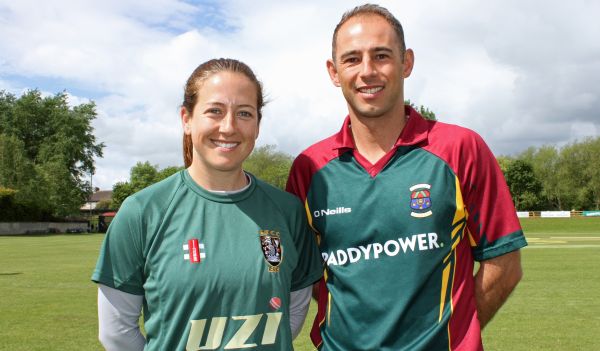
Instead, as Merrion’s Leinster Premiership challenge ended in agonising fashion with defeat by Malahide on Saturday, the quiet, steely run machine from Durban walked through an emotional guard of honour and brought the curtain down on an extraordinary domestic career.
In some ways it felt appropriate. Anderson’s cricket was rarely about theatre. It was about substance, technique, temperament and relentless accumulation.
“I’m incredibly proud of what I’ve achieved in the game over all these years, but more than anything I’m grateful for everything cricket in Ireland has given me,” he said. “It has allowed me to spend a huge part of my life doing something I love, alongside some brilliant people, and it has given me the opportunity and privilege of representing Ireland at international level. That is something I’ll always be immensely proud of and never take for granted.”
Anderson arrived in Leinster cricket as a young professional from his native South Africa, spending his first two seasons with Railway Union before switching to Merrion in 2008, where he has remained since. A permanent, consistent presence in an ever-changing world.
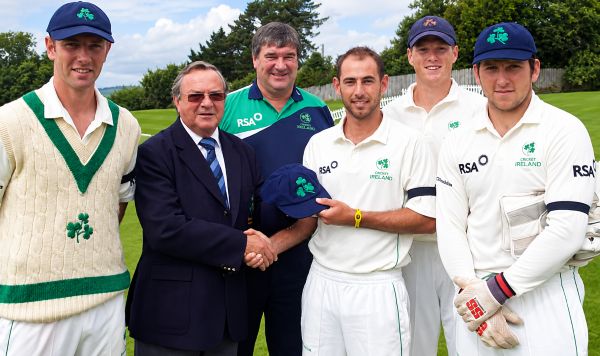
Over two decades he became part of the fabric of the Anglesea Road club, a cornerstone of their batting and, eventually, one of the great statistical giants of Leinster and Irish cricket.
Across 335 innings he scored 12,799 runs at an average of 47.7, placing him fourth on the all-time list behind Ginger O’Brien, David Pigot and Alan Lewis. His 22 centuries are bettered only by Jeremy Bray and Andre Botha, while he also compiled 87 half-centuries and a highest score of 185.
Anderson was far more than a batsman too, taking 276 wickets at just over 19, with best figures of five for four against Terenure.
“Merrion Cricket Club has become my home,” he said. “It’s a very special club and it has been an absolute privilege to have played for Merrion for as long as I have. I’ve always given my heart and soul to the club, and I’m incredibly proud of everything we’ve achieved together over the years.”
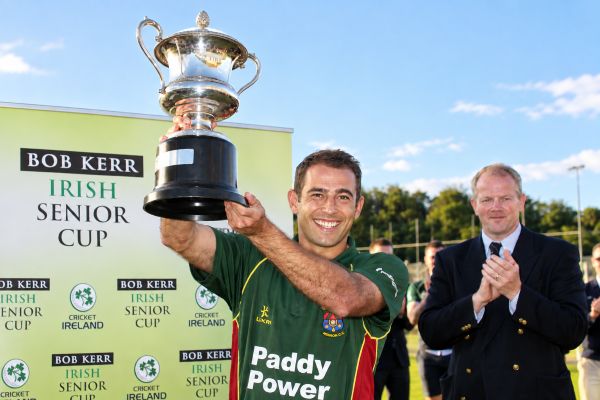
Those achievements were considerable. Anderson helped Merrion reach five Irish Senior Cup finals in seven years, winning the trophy in 2010 and again in 2016. The second of those triumphs provided one of the defining innings of his career, a century in a Man of the Match performance against Waringstown at Castle Avenue.

His record in Ireland’s premier knockout competition was extraordinary: 2,712 runs at 67.80, including eight centuries and 16 fifties. Only Decker Curry has scored more.
Yet for all the runs and trophies, Anderson insists the people mattered most.
“As much as I’ve always loved cricket, it’s the people I’ve shared the dressing room with that have kept me coming back year after year and made me want to spend my weekends playing the game. The wins and trophies have been special, but it’s the friendships, the dressing rooms and the memories we’ve made together that I’ll miss the most.”
Ireland recognition arrived in 2012, with Anderson making his debut against South Africa A in a four-day match at Oak Hill. There was an unusual footnote to that occasion. With the final day drifting towards a draw, the tea interval was extended so the Irish players could watch Katie Taylor defeat Russia’s Sofya Ochigava to win Olympic gold in London on August 9.
Fourteen years later, as Taylor’s own remarkable career draws to a close, Anderson too has decided the time is right.
His Irish career brought 26 caps, 873 runs at 29.10, six half-centuries and a century against the Netherlands at Deventer in 2013. His international timing was arguably unfortunate. Anderson’s career coincided with the golden generation of Irish cricket and ended shortly before Test status arrived — a format to which his compact technique, patience and temperament appeared ideally suited.
There was also major success in the interprovincial game.
Anderson scored 2,287 runs at 36.30, with 16 fifties and two hundreds — both against the Northern Knights — and became a central figure in the all-conquering Leinster Lightning side. As captain he led them to back-to-back trebles before calling time on both his interprovincial and international careers in early 2018. The competitive edge never disappeared.
“I’d like to think that throughout it all I played the game hard, but always played it fair,” he said. “There have been a lot of battles, some great rivalries and plenty of fiercely contested games. I look forward to being able to walk around the boundary at grounds all over the country, bump into some of those old opponents, shake their hands and talk about the good old days.
“There are plenty of battles that felt very serious when we were in the middle of them, but now that we’re off the pitch, hopefully we can share a few stories, have a laugh about them and remember just how lucky we were to have had those experiences together.”
Anderson turns 44 next month and, after two decades of sacrificing summer weekends to cricket, family now gets priority. His wife, former Irish international Isobel Joyce, and their two children have spent much of the past five summers following him from ground to ground.
“My wife Isobel has been an absolute rock throughout it all and my biggest supporter,” he said. “Now it’s time to give some of those summer weekends back to them. I’m looking forward to spending more time with the kids, taking them to their matches and being there to support them whatever they choose to do. Knowing our family, I’ve a feeling I’ll still spend plenty of my weekends at a cricket match — I’ll just be watching from the other side of the boundary this time.”
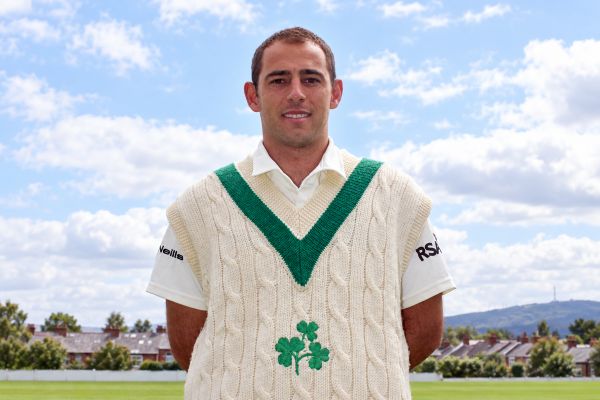
There may have been no Premiership trophy waiting at the end, Merrion falling painfully short as Pembroke took the title. But life is reality, not a scripted sporting movie. And when Anderson walked through that guard of honour on Saturday, the absence of a fairytale ending mattered little. The numbers, trophies, friendships and memories had already written a far more substantial story.
“I can look back with an enormous amount of pride and gratitude,” he said.
Few could argue with that.