



11 September 1937
Kiwis first visit was all over in one day
THE New Zealanders are in Belfast this week to play their first Test match against Ireland. It should be a memorable occasion, but not nearly as memorable as their very first visit here back in 1937.
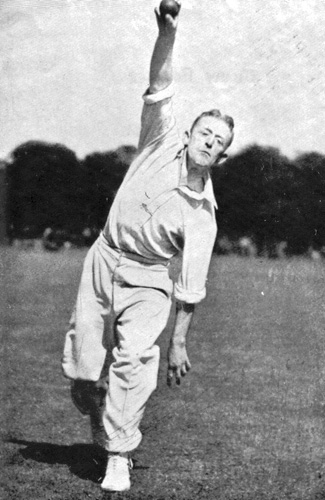
That match in Rathmines was scheduled to be a three-day first-class affair, a last hurrah for the side that had drawn all four matches of the Test series in England and lost only once, to Kent.
But the pitch at Observatory Lane had been soaked and proved a minefield for the batsmen. The game finished with ten minutes still to play on the first day, a rare occurrence in the sport – it has only happened four times in the last 55 years.
The historian Derek Scott described it as ‘the most astounding cricket ever seen in this country’; the Irish Times called it ‘astonishing’.
The tourists came straight to Dublin from Scarborough where they had played the day before. Their captain, All Black scrum-half Curly Page, was injured but nine of the 11 had played in the Test series.
The Irish won the toss and batted first, but were soon mesmerised by the conditions and the opposition.
The Sunday Independent blamed the overnight frost, as when the sun came out the pitch ‘played peculiar pranks and became a bowler’s paradise’.
Play started at noon and after Frank Connell was dismissed in the first over Ireland limped to 57 for 7 at lunch. They worked their way up to 79 all out in 38 overs, with the Leinster bat Ham Lambert – later an international rugby referee – top scoring with an unbeaten 25 from No.9.
Amazingly, the Kiwis were worse, all out for 64 in 32 overs, with Ireland captain Jimmy Boucher taking 7-13, the best bowling of a long career.
Boucher was a phenomenal cricketer, one who unquestionably have played Test cricket had he been born in England. For 30 years he dominated Leinster and Irish cricket, and regularly showed his skill at the expense of touring countries and counties. First capped as a schoolboy in 1929, he soon became a key member of the Irish side and enjoyed a 25-year international career interrupted only by the Second World War.
He won sixty caps for Ireland, and took 307 wickets, and in an era when Ireland played more first-class matches than today, he topped the English averages in Wisden in 1931, 1937 and 1948.
With a slender first innings lead the large crowd may have felt optimistic about Ireland’s chances, but that would last less than 20 overs.
Jack Cowie too bettered his career best, conceding just three singles off eight overs and taking six Ireland wickets with his pacy, accurate right arm which was, according to the Wisden annual ‘well-nigh unplayable’.
‘Bull’ Cowie finished with 114 wickets on the tour as Ireland were blown away for 30, their lowest score in a first-class match until Scotland dismissed them for 25 in 1965.
There were eight ducks in the innings, with Connell, Frank Quinn and John Barnes all completing a ‘pair’ in a day. The large crowd was entertained by separate pitch invasions by a dog and a sheep, the latter part of the ground-staff flock that kept the outfield grass short.
Local all-rounder Eddie Ingram made 15, and the next best bat made 4, with 10 byes.
That set the New Zealanders 46 to win, but the pitch was still causing havoc. Ireland were blessed to have a brilliant pair of spin bowlers in Boucher and Ingram, and they took the new ball.
Bill Carson nicked off Boucher from the third ball of the innings, and new bat Tom Lowry was missed by the keeper before he had scored. According to Scott, ‘Many good judges claim that if that catch had been held Ireland would have won the game.’
Lowry survived to the end, seeing the Kiwis to an eight-wicket win.
Three of Boucher’s first innings wickets were lbws granted by the famous local umpire ‘Mucker’ Byrne, nicknamed after a character in novels by Edgar Rice Burroughs, author of Tarzan.
The following year, one of New Zealand’s finest players, CS “Stewie” Dempster came to Dublin with an English county selection to play Ireland. Dempster had played on the early NZ Test sides but emigrated to England. He received two dubious lbw decisions by the ‘Mucker’ leading to the circulation of a poem:
"When Dempster came from Nottingham,
‘Twas said on his return,
He knelt down nightly by his bed,
And prayed for Mucker Byrne!"
With time to kill before the tourists returned down under, a two-day game was hastily organised which New Zealand won by an innings.
Cricket Ireland are banking on a full four days play at Stormont this week: a repeat of Rathmines 1937 would spell disaster for the governing body.