Irish cricket's 2026 state of the union
What will happen across the board as the calendar turns into the new year?

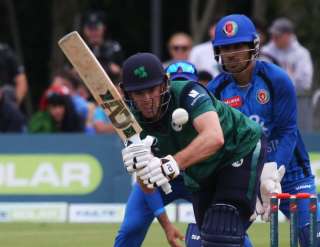
Matthew Humphreys celebrates taking a five-wicket haul against Bangladesh.
According to Larry David, the statute of limitations on wishing you all a Happy New Year expired on January 3rd. Suppose we’re all out of luck, so.
Unlike every other sports website under the sun, reviews of 2025 and future wishes for 2026 have been lacking in these parts. The allure of Dublin’s pubs and provincial rugby proved at times overly strong during a welcome stint home.
To make up for the absence, please accept a meaty look at Irish cricket’s prospects for 2026. With (hopefully) World Cups upcoming for the men and women, not to mention a monumental change with the arrival of a new Cricket Ireland CEO, this year has the capacity to be one of the most important in recent memory. Even if we say that every January.
There is scope for on-field success despite the disappointing situation off it. Provided we avoid another year of an insufficient volume of cricket. If ever there was an incentive for Cricket Ireland (CI) to schedule more matches, it would be to return to the status quo where individual talent temporarily distracts from the off-field difficulties plaguing the sport.
Can the men fire a shot at February’s World Cup? Will any new U19 talent crop up at their own global festival? Can the women reach a world event over the water in England, one which has the potential to reshape how the sport is viewed in Ireland?
And what of Sarah Keane, charged with replacing Warren Deutrom as CI’s new CEO? She brings an impressive set of credentials to the role. Will she be allowed to show off her capabilities or, like plenty of good people who have been and gone, will she emerge jaded and disillusioned after finding the situation impossible to surmount?
This is as important as year as any. Here’s how it all might play out.
Ireland Women
Arguably the most important event of the women’s year comes right at the start. Safely negotiate the upcoming qualifiers for the summer’s T20 World Cup and Ireland have ticked countless necessary boxes. Finally overcome their qualifier hoodoo. Feature in an English World Cup close to home. Increase their visibility. Guarantee more matches and, crucially, match fees. Get in the franchise shop window.
Without a World Cup, 2026 lacks context. The Women’s Championship is important, but more so for player development than visibility. This Irish team has lacked the attention of playing at a global level for some time. Their top talent is too good to miss out once again.
All of which would ensure losing in a third consecutive qualifier borders on disastrous. Given the competitive context, four teams qualifying into an expanded tournament, not to mention Ireland’s ranking leaving them as comfortable favourites to progress from next week’s event in Nepal, we’re talking about tearing the whole thing up should they fail to look after business. It would certainly leave the coach and captain in a difficult position.
The smart money says they’ll do it. They are the best team on paper, let alone fourth best. Spinning conditions might bring other teams closer to their level, but not enough to knock Ireland out of that top four.
The pessimistic voice on the shoulder points to Ireland’s historic performance under pressure. In 2023, they beat Australia in a T20 World Cup warm-up only to flop during a winless run in the tournament proper. A batting collapse in the 2024 qualifier cost them after coasting all the way up to the Scotland contest. Fielding lapses in tricky conditions haunted them at last year’s ODI qualifying event. Surely these can all be put in the past, given the task this time around is more straightforward?
If World Cup qualification is the biggest marker of success in 2026, a scalp or two in England come June would only add to the positivity. Beating West Indies at home is to be expected, given where this group is at. Travelling to England again in September will be tricky, but if the hosts rotate, what’s to stop another scalp or two?
Away from results, the biggest indication of growth in this squad would be a dramatic rise in the standard of fielding. It was a chronic issue during December’s series in South Africa, as it was during the last World Cup qualifier. At this stage, the conversation on fielding has loomed over this side for so long that it becomes a question of desire, as opposed to just ability.
Away from the reliable hands of Gaby Lewis and Orla Prendergast, how many see fielding as an enjoyable part of the game, an area to thrive, as opposed to a necessary evil? How many do additional work and take responsibility for their previous errors?
This is a young squad with many players still adapting to professionalism. It also should be stated that high catches are impossible to practice indoors during the winter. Yet for all the caveats, there comes a point where, should standards remain maddeningly inconsistent, questions go beyond talent and athleticism. They instead focus on mentality, on the desire to be the best professional cricketer possible.
On the evidence of recent performances, some players are still to find that innate quality.
Ireland Men
Another World Cup year brings a tricky conversation when defining success. In a group with Sri Lanka, Australia, Zimbabwe and Oman, few people expect Ireland to finish in the top two and progress. Especially considering Sri Lanka and Australia are two of the full member nations against whom Ireland do not have a good record. While Zimbabwe are familiar rivals, Ireland should aim to be stronger. Ditto Oman, even if they did beat a lacklustre Ireland in 2023.
The World Cup squad is expected to be announced soon. No surprises are anticipated. With Ross Adair back fit, any deviation from the following group would be unexpected: Stirling, Adair (x2), Tector (x2), Tucker, Campher, Dockrell, Delany, Calitz, McCarthy, Young, Humphreys, White, Little.
If Paul Stirling and co somehow reach the super eights in Sri Lanka, rejoice. All bets are off at that point and any additional victories are a bonus. Should they not progress, no one will be labelling them failures provided they avoid the dire run of USA 2024. February’s action represents one of those competitions where, given the difficulties, everyone will be happy provided Ireland perform respectably and win a match or two,
The rest of the year is hard to evaluate, given we don’t know what’s happening. Sourcing behind the scenes suggests May’s Test with New Zealand is locked in, albeit CI have not come out publicly with that information.
Beyond that, there is hope that India come to town, a trip which would pay for games against Bangladesh and Afghanistan (albeit both series could be played oversees). We won’t mention the ETPL too much at this stage, but they’re still trying.
Given last year’s embarrassing fixture list, watching regular cricket would be a success in and of itself. Whatever about form or results.
In the best case scenario - admittedly taking the intellectual leap of assuming we get everything promised in terms of fixtures - securing a first win over India would undoubtedly be a huge fillip. Being competitive with Bangladesh in ‘home’ conditions and winning a series against Afghanistan would also be solid benchmarks.
Individually, it would be incredibly rewarding to see a young, non-county developed player thrive for Ireland at this World Cup. In 2022, it was Josh Little. What we wouldn’t give to see him return to something approaching that form.
Harry Tector has been quietly strong since his move to number three in T20s. It’s about time he has a World Cup campaign that reflects his talent. Matthew Humphreys could certainly raise both his franchise workload and bank balance with a few good new ball displays. Lest we forget, Lorcan Tucker has previous when it comes to T20 World Cup runs against Australia.
Governance
There’s only one question that matters in regard to Cricket Ireland’s governance of the sport in 2026: how will the new CEO implement change in an organisation desperate for competence, let alone success?
Sarah Keane’s appointment remains a fascination, and it will be until we see decisions and resulting impacts. Since the announcement of her impending arrival late last year, she has been involved in decision-making behind the scenes. Keane will start formally working two days a week in February as she continues to manage her transition from Swim Ireland. A full-time start date is expected in March.
Ask about Keane around sporting circles and you find a reputation which is more positive than negative, a difficult feat to achieve in Irish governance. Swimming is a sport with plenty of recent success, the highlight being medals at the Paris Olympics. Keane is also widely seen as the person who put manners on the Irish Olympic movement following the Pat Hickey ticket scandal of 2016.
All of which risks building up a saviour-type figure ready to cure Irish cricket of all its woes. That she is a different face atop the CI tree guarantees some sort of rope with the public. The bona fides on the CV only add to that.
However, the sense from within the CI offices is that expectations of what can be achieved in year one are already being managed. Depending on who you ask, the organisation is in a position ranging from ‘challenging’ to ‘shambolic.’ No one comes forward with a positive adjective. How much can be achieved in a desirable timeline?
Keane’s background points to two pillars that form something resembling priorities: governance standards and a focus on athletes. A former member of Ireland’s water polo team, Keane is widely believed to operate under an ‘athlete first’ mentality, something which at times has been lacking from CI in recent years. Take the decision to play a Test at Lord’s for financial and/or political reasons in the build-up to the 2023 World Cup qualifiers. Ireland turned up to Zimbabwe drastically under-prepared for white ball matches in those conditions.
That athlete first mantra will be tested early in Keane’s tenure. It may well already be under pressure, with negotiations for the 2026 player contracts currently underway. Player representatives are keen to bring some sort of revenue sharing arrangement to the table, something which was a sticking point in 2024 when the male players rejected a round of offers. The problem is CI’s lack of revenue to offer, a dearth which is being explained to players who are frustrated by the consistently late nature of budget approval. With revenue from proposed fixtures against India this summer doing a lot of heavy lifting when it comes to CI’s planned spending for 2026, the fact that those games are yet to be confirmed leaves the company in a difficult place when committing cash elsewhere, including to players.
It says plenty about the current state of the CI offices that these contracts won’t be at the top of Keane’s in-tray once she gets going. The governance structure and concerning financial position are expected to be the two immediate priorities.
After Deutrom’s departure, more changes will be made to CI’s senior leadership team. We already know that head of facilities Richard Fahey is set to take up a more senior position as CEO of Hockey Ireland. There are no plans to replace him at this stage.
Further restructuring is expected, with the high performance department a potential starting point. Publicly, there has been little clarity on the division of labour between long time performance director Richard Holdsworth - now director of cricket - and head of high performance Graeme West, who joined CI late in 2024. Privately, there are figures within the organisation who aren’t sure who they report to on certain matters. CI’s position is that West is the one responsible for high performance strategy, but there is a belief that, with role responsibilities not widely clear, neither Holdsworth or West can be held accountable for the performances of national teams at senior and youth level. If not them, who?
Greater clarity is expected. What shape that will take will be fascinating. If subtraction is the option taken, which name departs? West is only in the door while Holdsworth has been in situ since the end of 2011. Is it easier to get rid of the newbie or the old hand? An educated guess would look at criticism at board level of the high performance department before West’s arrival, alongside the perception that Holdsworth worked closely with former CEO Warren Deutrom, who of course is no longer in the building.
An answer on this issue is expected in the coming months, if not weeks. One thing which should help whoever leads the high performance department into the future is expected investment in Ireland’s development pathways. One senior figure in Irish cricket recently compared the options available to family in a minor county in England to this side of the water. The English youngster is involved in four pathway set-ups, whereas the source’s own children only receive high-level training if provided by their parents. Those with knowledge of conversations have pointed to the new regime’s surprise at the dearth of money spent on Ireland’s pathways.
Away from the high performance department, the future of the senior leadership team remains something to watch. Ask any high-functioning official their recipe for success and high up on the list of ingredients is good people around them. Every leader needs support from those they trust. In other words, their own people.
As things stand, Keane is inheriting all of her senior colleagues. None of them are her people. Everyone is likely to be given a chance to impress, but would anyone be surprised to see underperformance lead to further change within the first year or so of the new regime?
Good luck sorting all that out in a timely fashion. Meanwhile, budgets need to be signed off and summer fixtures must be confirmed. Fan clamour against the untimely announcement (or lack thereof) of the dates for May’s slated Test against New Zealand is already deafening. Not to mention fixtures thereafter.
The financial picture to pay for games later in the summer remains clear as mud. India have not confirmed either way if they’re stopping off as part of their white ball trip to England. If they do, the men’s FTP fixtures can be paid for. If they don’t, there is still hope that cash from the ETPL will act as damage limitation and preserve at least some of the schedule.
As always, the sticking point with the proposed franchise league is the sale of teams. Sources with knowledge of discussions have suggested that two franchises are either close to being sold or have received some sort of commitment. What will Keane’s approach to the ETPL be, given her inexperience in cricket full stop, let alone the relatively new franchise scene, combined with the potentially awkward presence of her predecessor, Warren Deutrom, as chair of the ETPL parent company?
Given the missing India confirmation and the ever-present (and justified) cynicism in regard to the artist formerly known as the Euro Slam, there is still a possibility that Ireland men’s summer post-May looks depressingly barren. This would be a repeat scenario of the 2025 fixture list which saw CI chair Brian MacNeice apologise to players (senior CI figures have since disagreed with the labelling of that conversation as an ‘apology’). The women’s schedule should be less volatile, provided qualification for June’s T20 World Cup is secured.
Still reading? Fair play, because that minefield hasn’t even broached the issue of Keane’s relationship with the ICC. The power dynamics of a woman from a non-cricketing background dealing with what is ostensibly an old boys’ club dominated by India’s influential bank account are challenging. Perhaps it is a blessing that, since the funding hike of 2024, the ICC has made clear that CI is now on its own in terms of international support (the return of the ODI Super League and WTC inclusion have been surprising bonuses, albeit being forced into playing - and not cancelling - fixtures could easily bankrupt CI).
Knowing the high point of what will flow in from Dubai, playing the ICC shouldn’t be the priority. It’s time to get the domestic house in order. Figure out why the number of people buying tickets to Irish matches has plummeted. Attach some sort of value to the TV rights (CI’s broadcast deal runs out at the end of 2026 so future negotiations can be added to the to-do list). Irish people are interested in cricket, they just don’t feel sufficient connection to invest time and, crucially, their disposable income.
Given all the required change, one wonders to what extent Keane knew what she was signing up for. Perhaps it was impossible to get a full picture until stepping foot inside the office. Regardless, the above list is an indictment on the previous regime and those whose job it is to hold senior leadership to account. The situation should never have been allowed to fester to this extent.
As part of the clean up, it is crucial that Keane gets complete information from those around her who are aware of the issues. Will acknowledging the sins of the past always be compatible with presenting a picture of competence from those who might need to win Keane over to keep their job?
There is a way in which all this can be spun as a positive. Anyone who can achieve even moderate success from this starting point should emerge with a stellar reputation. If it all goes belly up, the ‘poisoned chalice’ label can be claimed from the excuse jar.
With topics such as governance, finances, fixtures and pathways dominating discussion, Irish cricket faces much of the same problems this year as it did last. The big difference in 2026 is the name atop the masthead. Those of us who love this sport can only wish Keane well as she bids to make an impact.
It is difficult to ascertain what constitutes a successful beginning of her tenure. There are countless issues which need to be solved. If a handful of them are dealt with positively in year one, that would represent as good a start as any.